
LinkedIn Is Cracking Down on AI Slop. Here’s What That Means for Your Strategy
If your LinkedIn reach has quietly dropped over the past few months, you’re not imagining it. I’ve watched it happen on my own posts — content that used to perform well started falling flat, and the pattern was hard to miss: the posts that felt more AI-generated or overly polished were the ones taking the hit.
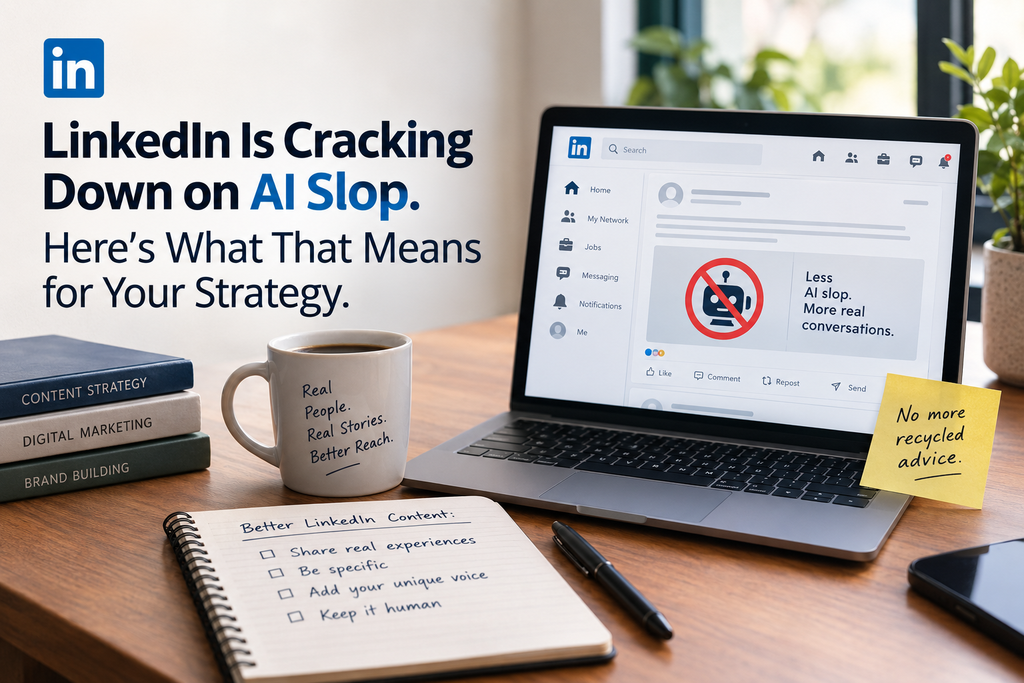
LinkedIn has been increasingly vocal about cracking down on “AI slop” — low-effort, mass-produced content that adds little real value. For creators and brands who’ve leaned on AI tools to churn out posts, this shift changes the game. Here’s what’s actually happening and how to adjust your strategy before it costs you more reach.
Table of Contents
What’s Actually Triggering the Drop in Reach
Based on what I’ve seen across my own content, LinkedIn Is Cracking Down on AI Slop isn’t just about format or topic. It comes down to writing patterns. LinkedIn’s systems appear to be getting better at recognizing the telltale rhythm of AI-generated text — the overly balanced sentence structures, the generic transitions, and the “in today’s fast-paced world” style openers.
Posts that read as templated, even if they’re technically well-written, seem to get quietly deprioritized in the feed. Meanwhile, posts with a distinct, personal voice keep showing up. This is one reason why understanding LinkedIn Is Cracking Down on AI Slop matters for creators who want to improve their content strategy.
The Content Mistake That’s Getting Punished Most
The clearest pattern I keep running into is generic, recycled advice with no real story behind it. Think posts that repackage the same “5 tips to grow your network” or “3 lessons from successful leaders” advice you’ve read a hundred times before, just reworded.
It’s not that the advice is wrong. It’s that there’s nothing behind it — no specific situation, no personal stake, and no evidence the writer actually lived through what they’re describing. That’s exactly the kind of content LinkedIn Is Cracking Down on AI Slop seems to be addressing, although LinkedIn’s specific ranking and detection methods aren’t fully disclosed publicly.
How I’ve Adjusted My Own Approach
Once I noticed the drop, I changed how I approach my own posts. The biggest shift came from understanding how LinkedIn Is Cracking Down on AI Slop and why authentic content matters. I started leading with more authenticity, specifically by sharing personal stories instead of general advice.
Instead of writing “here’s how to improve your networking strategy,” I write about an actual networking conversation that went sideways, what I learned from it, and how I’d approach it differently now. This approach helps me respond to the concerns surrounding LinkedIn Is Cracking Down on AI Slop while making my content more personal and relatable.
The underlying lesson stays the same, but the framing and engagement can change. By focusing on real experiences, I can create content that feels more genuine and avoid some of the generic patterns associated with LinkedIn Is Cracking Down on AI Slop.
A Simple Framework for AI-Slop-Proofing Your Posts
If you want to check whether a post you’re about to publish is at risk of reading as AI slop, run it through this quick filter:
- Could only you have written this? If the post could’ve been written by anyone in your industry, it’s too generic.
- Is there a specific moment in it? A real conversation, a real mistake, a real result — not a vague reference to “a client I worked with.”
- Does it include a detail AI wouldn’t guess? A number, a name (with permission), a specific outcome.
- Would you say this out loud to a colleague? If it sounds like a LinkedIn post and nothing like how you actually talk, rewrite it.
Generic Advice vs. Experience-Driven Content
| Generic (AI Slop Risk) | Experience-Driven (Performs Better) |
| “Networking is key to career growth.” | “I almost skipped a conference last year — the one conversation I had there became my biggest client.” |
| “Leadership requires clear communication.” | “I once lost a project because I assumed my team understood a brief I never actually explained.” |
| “5 tips to boost your productivity.” | “Here’s the one change that actually fixed my afternoon slump, and why the other four things I tried didn’t.” |
The right column isn’t just more engaging — it’s harder for anyone to replicate, which is exactly why it holds up better under LinkedIn’s current standards.
What to Do Starting Today
If you take one thing from this article, make it this: share real experiences instead of generic advice. You don’t need a dramatic story. A small, specific moment — a mistake, a conversation, a decision you second-guessed — will outperform a polished, generic tip list almost every time.
This doesn’t mean abandoning structure or clarity. It means grounding what you write in something that actually happened to you, so the post couldn’t have come from anywhere else.
A Few Limitations Worth Noting
This shift in performance isn’t something LinkedIn has fully detailed publicly, so some of this is pattern recognition from firsthand experience rather than confirmed policy. Results can also vary by industry, audience size, and posting frequency — what works for one creator’s audience won’t behave identically for another. Treat this as a strong directional signal, not a guaranteed formula.
FAQs
Is LinkedIn actually penalizing AI-written posts?
LinkedIn hasn’t published an exact detection method, but creators are widely reporting reduced reach on content that reads as generic or AI-generated, particularly recycled advice with no personal story attached.
Can I still use AI tools to help write LinkedIn posts?
Yes — the issue isn’t using AI as a tool, it’s publishing content that reads as generic or templated. Using AI to help structure a post built around your own real experience is different from letting AI generate the substance.
What’s the fastest way to make an existing post less “AI slop”-like?
Add a specific, real detail: a moment, a mistake, a number, or an outcome that couldn’t apply to just anyone.
Does post length matter for this?
Not directly. A short post with a genuine story tends to outperform a long, generic one.
Conclusion
LinkedIn’s crackdown on AI slop isn’t about punishing AI use — it’s about rewarding content that actually comes from somewhere. If your reach has dropped, look at whether your recent posts read as generic advice or as something only you could have written. Lead with real experience, be specific, and let your actual voice carry the post. That’s the strategy that holds up.
As a freelance digital marketer in Kochi, I help businesses, startups, and personal brands build a strong online presence through effective digital marketing strategies. My services include SEO, social media marketing, content marketing, Google Ads, and online marketing solutions tailored to your business goals. I focus on improving brand visibility, attracting the right audience, and generating meaningful results through data-driven marketing strategies. Whether you are a local business in Kochi or a growing brand looking to expand online, I provide personalized digital marketing solutions designed to support your growth and strengthen your online presence.